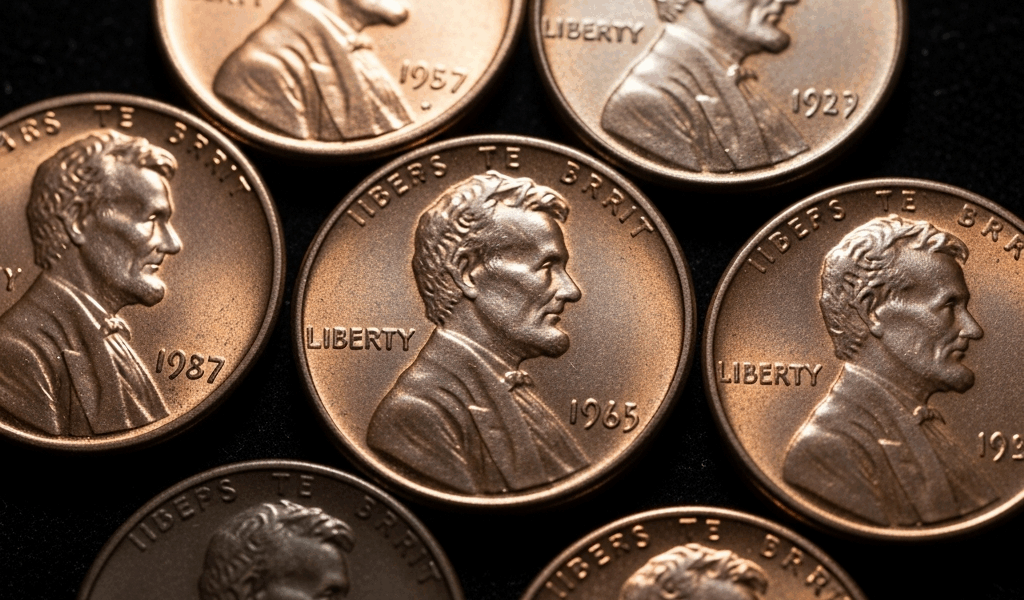
Why Wheat Penny Values Vary So Much
Lincoln wheat penny collecting has gotten complicated with all the misinformation flying around. As someone who has spent the last decade buying and selling coins at shows, I learned everything there is to know about what actually drives value. Today, I will share it all with you.
But what is a wheat penny’s value, really? In essence, it’s a number determined by three things: the date, the mint mark, and the grade. But it’s much more than that. Wheat Pennies rolled out of Philadelphia, Denver, and San Francisco from 1909 all the way through 1958. Philadelphia coins carry no mint mark. Denver shows a small “D” below the date — easy to miss if you’re not looking. San Francisco stamps an “S” in that same spot. San Francisco produced fewer coins across a lot of those years, which means S-mint pennies are often scarcer and worth more. That’s what makes mint marks endearing to us collectors. So, without further ado, let’s dive in.
Key Date Wheat Pennies Worth Real Money
These are the dates that actually move the needle. Finding one in decent shape can genuinely change what your whole lot is worth.
The 1909-S VDB — The Crown Jewel
This is the one. The “VDB” stands for Victor David Brenner — his initials appeared on the coin briefly, then got yanked due to public controversy. The “S” means San Francisco, where just 484,000 of these were struck. Heavily worn but readable? Expect $150 to $300. Still showing decent detail? $400 to $700. Uncirculated? You’re looking at $1,500 and climbing. I once sold one without getting it authenticated first — the buyer questioned it even though the coin was completely genuine. Don’t make my mistake. Get it slabbed by PCGS or NGC if it looks at all promising.
The 1914-D
Denver’s 1914 run was small. 1.19 million coins total. Well-circulated examples land at $40 to $80. Lightly circulated pushes to $100 to $200. Uncirculated specimens hit $500 or higher. This one doesn’t get the same fame as the 1909-S VDB, but it punches well above its weight in actual scarcity. Dealers know it. Serious collectors know it.
The 1922 Plain
Here’s a weird one. Most 1922 pennies carry a “D” for Denver. But a small batch came out with no mint mark at all — an accident that turned into a legitimate rarity. Circulated examples run $75 to $150. Good specimens push $200 to $400. You need to examine the space below the date carefully. No “D” means you’ve got something worth a second look.
The 1931-S
San Francisco’s 1931 output was tiny. A worn example sits at $30 to $60. Lightly circulated jumps to $80 to $150. Uncirculated pieces can clear $500. Frustrated by low production quotas that year, the San Francisco Mint struck just 866,000 coins using the same dies and equipment as other years — resulting in one of the decade’s scarcest dates. This one rewards patience when you’re rolling through estate coin lots.
The 1955 Doubled Die
Probably should have opened with this section, honestly. The 1955 Doubled Die is famous — a major minting error where the obverse was struck twice, leaving visible doubling across the date and the lettering. A worn example still commands $400 to $800. A nicer circulated coin runs $1,000 to $2,500. These are legitimate errors, pursued hard by error collectors specifically. If you think you have one, get it under a loupe in good light before you get too excited. I’m apparently better at spotting these than most — a $7 Radio Shack magnifier works for me while naked-eye checks never quite cut it.
Semi-Key Dates Collectors Should Know
These coins aren’t lottery tickets. But they’re not junk either. Serious hunters working through rolls or estate collections stay alert for these dates and mint marks.
- 1909-S (no VDB): $15 to $35 circulated. Less famous than its VDB cousin but still legitimately scarce.
- 1910-S: $12 to $28 circulated. Low mintage out of San Francisco.
- 1911-S: $10 to $25 circulated. Another S-mint rarity from the early years.
- 1912-S: $8 to $20 circulated. Noticeably scarcer than the Philadelphia version.
- 1913-S: $10 to $25 circulated. Production stayed low in San Francisco that year.
- 1914-S: $15 to $40 circulated. Small mintage makes this one worth seeking out.
- 1924-D: $6 to $15 circulated. Denver’s 1924 run was a low producer.
- 1926-S: $7 to $18 circulated. San Francisco’s numbers dipped noticeably that year.
None of these will make you rich. But if you’re sorting through an estate lot on a Saturday afternoon and you pull out a 1911-S in solid condition, that’s a $20 find — maybe more at the right dealer. A few semi-key dates across one afternoon’s sorting session add up faster than people expect.
Common Dates and What They Actually Fetch
Let’s be direct. Most Wheat Pennies sitting in old jars or coffee cans are worth face value to maybe 10 cents. Full stop. High mintage years killed the premium.
- 1944: 3–5 cents circulated. 1.04 billion struck that year alone.
- 1945: 3–5 cents circulated. Over a billion minted.
- 1946: 4–8 cents circulated. Another high-production year.
- 1956: 4–8 cents circulated. Common modern date.
- 1957: 4–8 cents circulated. High-volume right up to the end of the series.
Here’s the twist though. Even common dates in uncirculated condition can fetch $2 to $5 apiece. Find a roll of original, never-circulated 1944 pennies tucked in the back of someone’s closet — that roll is realistically worth $20 to $40 depending on how they’ve held up. Happens more often than you’d think at estate sales.
How to Check Your Wheat Penny Before You Sell
You’ve pulled a few coins from your grandfather’s dresser and you want to know if any of them mean anything. Here’s what to actually do.
Locate the Mint Mark
Flip the coin to the obverse — Lincoln’s profile side. Look directly below the date. Philadelphia struck coins with nothing there. Denver left a small “D.” San Francisco left an “S.” The mark itself is maybe 2 millimeters tall. You’ll need decent light and possibly a magnifying glass. I’ve misjudged coins in bad lighting — missed a “D” entirely and underpriced the coin as a result. Get a proper light source first.
Assess Grade Without a Microscope
Grading is an art, but you can eyeball the basics. Circulated means visible wear on Lincoln’s cheek, the reverse lettering, and the wheat stalks. Lightly circulated still shows detail in Lincoln’s features but has clear smoothing from handling. Uncirculated means no wear at all — sharp details, original luster, maybe some bag marks from storage but nothing from actual use. Hold your phone’s flashlight at a low angle and tilt the coin. That raking light shows wear patterns better than overhead lighting. Honest self-assessment beats wishful thinking every time.
Check for Cleaning
Cleaned coins take a serious value hit — even if they look bright and attractive. Original Wheat Pennies develop a natural patina over decades. A coin that’s been polished or dipped in acid looks unnaturally uniform, almost plastic in its shininess. Dealers spot it immediately and price accordingly. Don’t clean your coins before selling them. That is a rookie mistake that costs real money. I’ve watched people walk into a show with a beautifully polished 1909-S VDB and leave disappointed.
Use Current Price Guides
PCGS CoinFacts and the NGC Price Guide are your best starting points — both update regularly and show realistic value ranges across grades. Also check completed eBay listings, filtered specifically for “sold” results, not asking prices. Heritage Auctions archives are equally useful. What coins actually sold for beats what sellers hope to get.
Know When to Slab
Professional grading from PCGS or NGC runs $20 to $50 per coin depending on turnaround tier. It’s only worth it when the coin could grade high enough to justify that fee. A 1909-S VDB in uncirculated condition? Slab it — the certified grade bump pays for itself and then some. A common 1944 penny in average circulated condition? Don’t bother. The slab costs more than the coin’s worth. Raw coins at a local dealer will typically fetch 20 to 30 percent less than a PCGS-graded version of the same coin, but the transaction is faster and certain. Auction houses can outperform that — at least if the right bidders show up on the right day.
Once you’ve worked through your coins, a reputable local dealer can make offers on the full lot, or you can break out the semi-keys and better pieces and sell individually. Either way, you’ll know what you actually have — and whether your grandfather’s dresser drawer turned out to be worth something.

Stay in the loop
Get the latest numisma master updates delivered to your inbox.