Coin collecting strategies have gotten complicated with all the “you need every date and mint mark” pressure flying around. As someone who’s spent years studying numismatics and the specific satisfactions that different collecting approaches deliver, I’ve learned everything there is to know about why the type set is one of the most intellectually satisfying — and most underrated — paths in the hobby. Today, I’ll share it all with you.
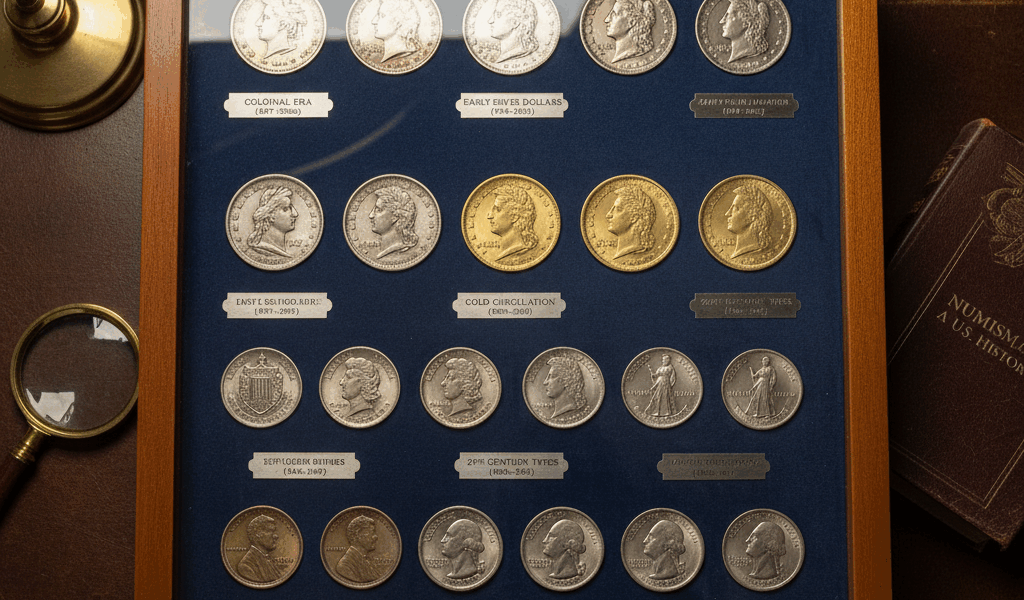
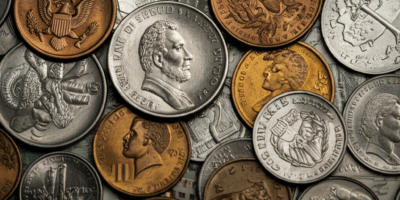
The type set is one of the most intellectually satisfying collecting strategies in numismatics, and it’s chronically underappreciated by collectors chasing either date-and-mint-mark completeness or single coins. A type set — assembling one representative example of each major design type across U.S. coinage history — lets you tell the complete story of American coinage without the expensive key dates that can make date sets financially prohibitive. Done well, it’s also one of the most visually impressive collections you can build.
Define Your Type Set Before You Start Buying
Probably should have led with this, honestly — the collectors who most regret their type set approach are the ones who made purchase decisions before defining what “complete” meant to them. Before buying a single coin, decide what “complete” means to you. The Red Book (A Guide Book of United States Coins) defines type set categories in its standard format, and following this structure gives you a universally recognized framework. But within that framework, there are decisions to make:
Will you include obsolete denominations? Half cents, two-cent pieces, three-cent pieces, twenty-cent pieces, and half dimes are all part of a comprehensive type set, but they add complexity and cost. Will you include gold coinage? The gold type set represents some of the most beautiful American coin designs, but entry-level gold coins in acceptable condition cost $300-800 per coin at minimum. Will you set a target grade? Attempting a type set in Very Fine is dramatically different from attempting one in MS-64 or above. The decisions compound, and making them deliberately at the start saves significant pain later.
Where to Start: The Easy Coins First
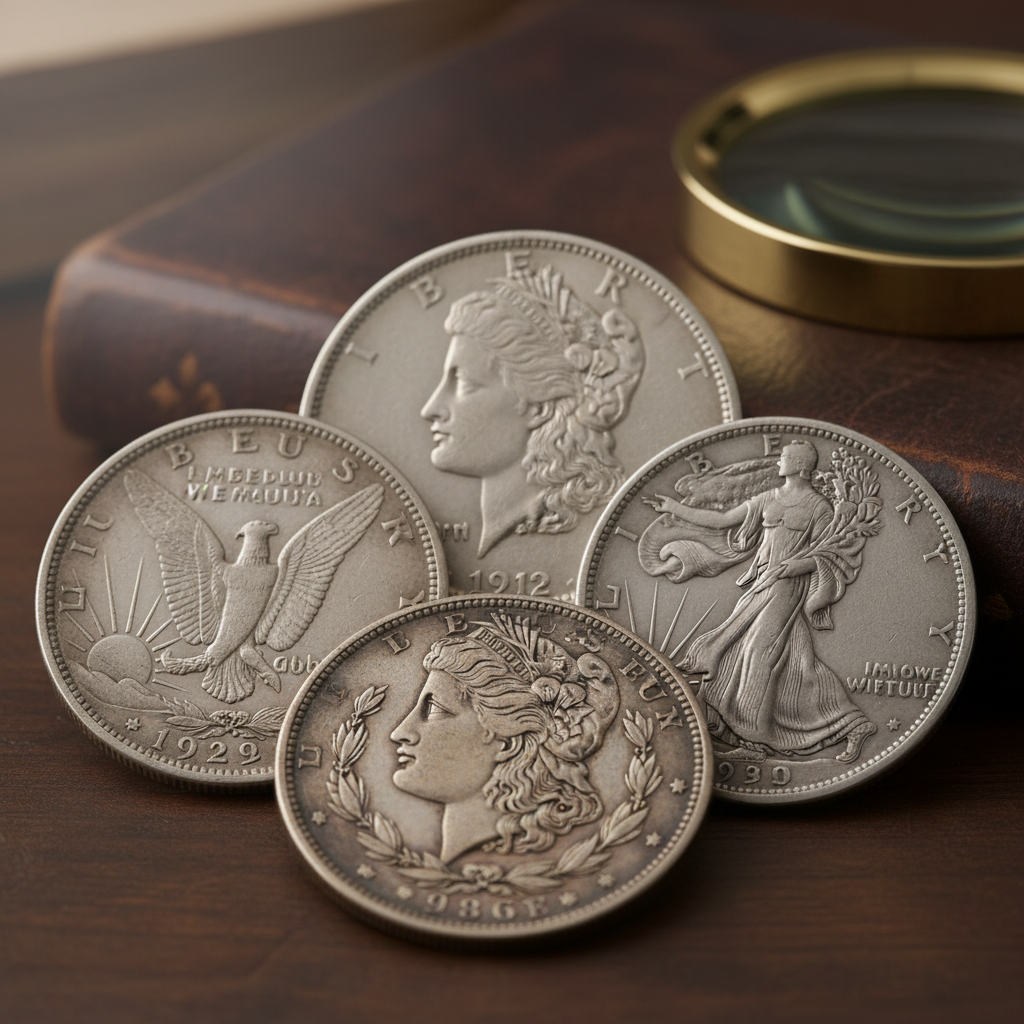
Start with the coins you can get right. Morgan dollars, Peace dollars, Walking Liberty half dollars, Standing Liberty quarters, Buffalo nickels — these series are well-supplied in grades from G through AU and represent some of the most beautiful American coin designs. Buying these in your target grade teaches you the market, builds your eye for grading, and creates early momentum in your collection. That’s what makes the type set approach endearing to us who’ve tried other approaches first — it lets you build skills and knowledge while making real progress.
Morgan dollars in particular are excellent starting points: widely available, heavily certified, and the grading characteristics are well-documented enough that a new collector can develop real competence quickly. A type set Morgan dollar in VF-35 can be acquired for $35-50. Buy the grade you’ve decided on and move on — don’t upgrade individual coins before completing the framework unless you have unlimited budget and time.
The Key Budget Decisions: Early American Coinage
Frustrated by prices on early American coinage, many type set collectors make one of two mistakes: they either skip the early types entirely (leaving a permanent gap) or they spend disproportionate resources on one or two early coins while neglecting the rest of the collection. The expensive section of a U.S. type set is the early American coinage: Flowing Hair and Draped Bust types from the 1790s-1800s, Classic Head and Capped Bust types from the early 19th century.
A Flowing Hair half dollar from 1794-1795 — necessary for a complete silver type set — is a five-figure coin even in heavily circulated grades. The strategies for handling these: accept problem coins with acknowledged issues (cleaned, holed, repaired) at significant discounts, target type examples in Good-4 to Fine grades rather than pursuing condition rarity, or make peace with the fact that your type set will omit the ultra-early issues and build around them.
I’m apparently one of the few collectors who finds the “incomplete but honest” approach more satisfying than a set that treats a photo in a binder position as equivalent to an actual coin. Many serious collectors assemble what they describe as an “extended type set” — complete through the Capped Bust era with the very earliest types honestly omitted. This is a legitimate solution to an expensive problem.
Where Value Hides in a Type Set
A well-built type set consistently appreciates because you’re collecting proven designs with historical demand. Morgan dollars and Walking Liberty halves have never lost collector interest. Early American silver types have similarly maintained demand because they represent genuinely historical American artifacts. Building a type set in circulated grades gives you a collection that trades at predictable multiples of spot silver and gold, with premiums for design rarity.
The most efficient type set building strategy: buy certified coins from major auction houses when the lot includes type coins packaged together. Estates and collection dispersals often include type set components, and the per-coin price in these lots is frequently below what you’d pay buying individual coins.
The Display Question
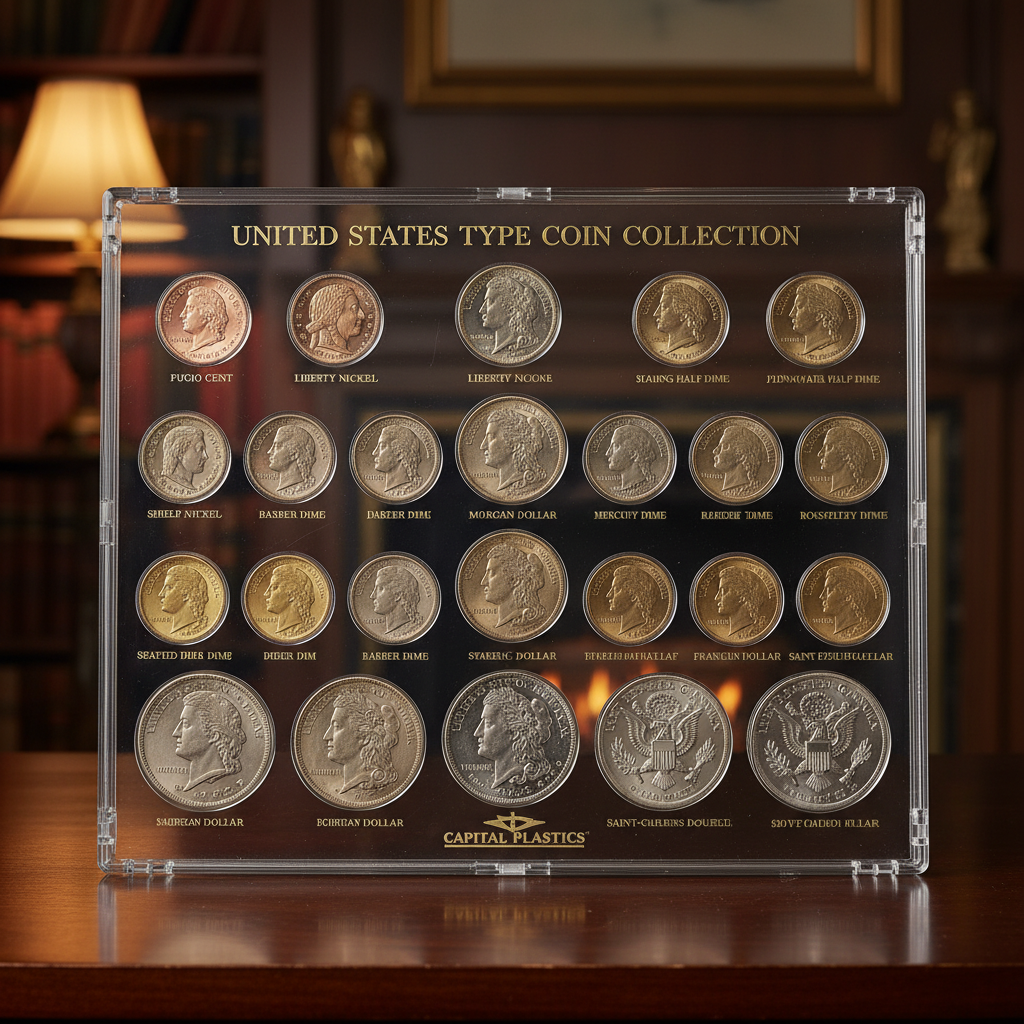
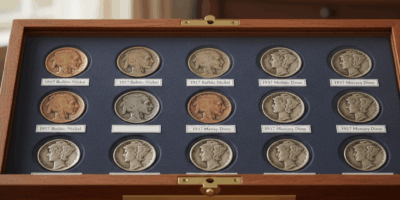
A completed type set deserves proper display. Capital Plastics makes custom holders for type sets that present the collection in a single display case with labeled positions for each type. These holders run $200-400 for a full-coverage type set — not cheap, but the finished display justifies the cost. A type set properly displayed is one of the most impressive single objects in numismatics: the complete visual history of American coinage in one case. That’s the payoff for the patient work of assembling it without going broke in the process.

Stay in the loop
Get the latest wildlife research and conservation news delivered to your inbox.