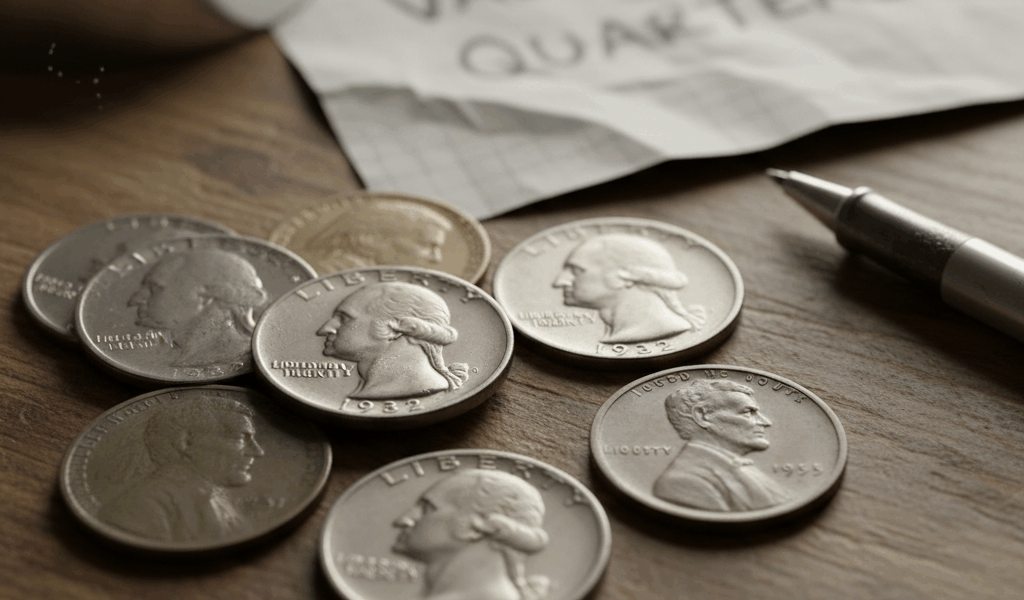
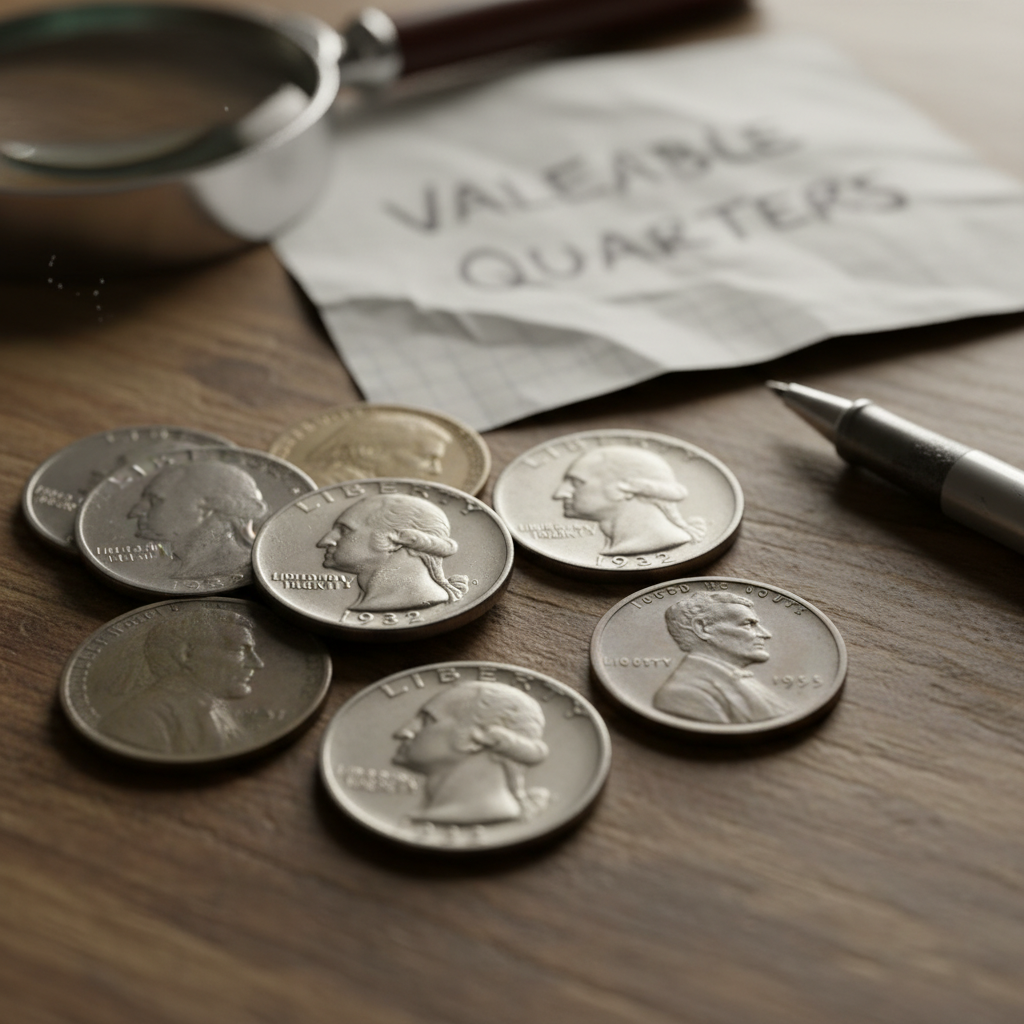
Most quarters in your pocket are worth 25 cents. A small number of them are worth considerably more, and the difference comes down to knowing what to look for. As someone who has gone through rolls of coins looking for silver and found more than a few surprises in estate collections, I learned exactly which quarters command premiums and why. Today, I will share it all with you.
Pre-1965 Silver Quarters
This is the starting point for anyone searching quarters for value. Quarters minted before 1965 contain 90% silver. At current silver prices (consistently above $20/oz in recent years), any pre-1965 quarter contains significantly more than 25 cents in silver alone. The key date is 1964 — quarters dated 1964 and earlier are silver, and quarters dated 1965 and later are copper-nickel clad.
A quick test: pre-1965 quarters have a solid silver edge with no copper stripe visible on the rim. Post-1965 quarters show a distinct copper-colored stripe along the edge. In average circulated condition, pre-1965 Washington quarters are worth roughly their melt value — typically $4–7 depending on silver prices. In better-preserved grades (MS65 and above), common date silver quarters can be worth $20–100+.
Key Dates in the Washington Quarter Series
Some dates in the Washington quarter series had very low mintage and are genuinely scarce. The 1932-D from Denver had only 436,800 pieces struck — the lowest mintage quarter of the series. In circulated grades, worth $100–200+. The 1932-S from San Francisco at 408,000 pieces carries comparable value.
If you find a quarter dated 1932 with a D or S mintmark (look under the eagle on the reverse), have it evaluated by a professional numismatist or grading service before spending it. Probably should have mentioned that detail more emphatically — I’ve heard from collectors who nearly dropped a 1932-D into a parking meter before checking the mintmark.
State Quarter Errors
The 50 State Quarters program ran from 1999 through 2008. Most state quarters are worth face value. Error coins from this series, however, can be valuable. The Wisconsin Extra Leaf quarters (2004-D) created by a die gouge on some Denver Mint coins show what looks like an extra leaf on the ear of corn on the reverse — two varieties, extra leaf high and extra leaf low, have sold for $200–500 with top examples going higher.
The Minnesota doubled die quarters (2005-P) show doubling on the extra tree details on the reverse, with value varying by severity. The Kansas “In God We Rust” quarters (2005) resulted from a filled die error that obscured the T in TRUST. State quarter errors are worth searching for in bulk rolls from the bank, particularly those from 2004–2005.
America the Beautiful Quarter Errors
The follow-up series to State Quarters covers national parks and sites through 2021. Error coins exist here as well, though the collecting community is smaller. Watch for doubled die varieties, off-center strikes, and wrong planchet errors — a quarter design struck on a dime planchet creates an obviously wrong coin that collectors prize highly. These are rare finds, but they do turn up in circulation.
High-Grade Common Date Quarters
Not all valuable quarters are scarce dates. A common-date quarter in exceptional preservation — MS67 or MS68 grade — can be worth significant premiums because finding them in top condition is difficult. A 1964-P Washington quarter in circulated grade is worth silver melt, perhaps $5–10. The same coin in MS67: potentially $200–500. In MS68 with Full Head designation: potentially thousands. Population reports from PCGS and NGC show how many coins exist at each grade.
How to Check Values and Get Coins Graded
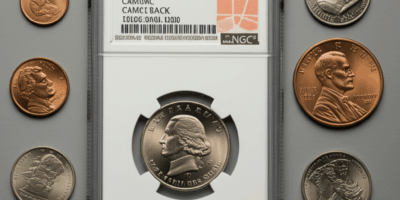
PCGS CoinFacts and the NGC Price Guide are the standard references for date and grade pricing. For potentially valuable pieces, professional grading by PCGS or NGC establishes an authenticated, conserved grade. Grading fees start around $20–30 per coin and make sense for anything potentially worth $100+.
For practical searching: buy rolls of quarters from the bank and check for silver rims and unusual dates. Pre-1965 is the first sort. Pull everything before 1965, then look for key dates within that group. Many errors and varieties require a loupe (10x magnifier) to see clearly. The valuable quarters are out there — in coin shops, estate sales, old collections, and occasionally still in circulation.

Stay in the loop
Get the latest numisma master updates delivered to your inbox.